Education
•
8 minute read
Share Article

Table of Contents

USDT on TRON can be frozen by its issuer. Tether controls an on-chain blacklist built into the TRC-20 contract, and any address added to it can no longer send USDT. The balance stays visible, but it cannot be moved, swapped, or cashed out until Tether lifts the restriction.
In April 2026 Tether froze $344 million in USDT across just two TRON addresses, the largest single action in its history. Most freezes are tied to sanctions, law-enforcement requests, or stolen funds, but ordinary users and businesses can get caught up when they receive money from the wrong source. This guide explains how the blacklist works, how to check any address, and what to do if your USDT is frozen.
What a “USDT freeze” on TRON actually means
A USDT freeze on TRON is a restriction written into the token contract itself. When Tether blacklists an address, the USDT balance at that address stays on the ledger, but every attempt to send it is rejected. The tokens still exist; they simply cannot leave the wallet.
This is not the same as an exchange blocking a withdrawal. A token freeze works at the blockchain level, so importing the key into another wallet app changes nothing: the contract checks the address, not the software.
How a TRON USDT freeze appears and what it restricts
A frozen address looks normal in TronLink or on Tronscan: the balance and history load and no warning appears. The problem only shows when you try to send USDT and the transaction fails with a contract revert. After a freeze:
the USDT balance and past activity remain visible to anyone;
outgoing USDT transfers, swaps, and DeFi interactions using USDT are rejected by the contract;
new USDT sent to the address usually arrives but becomes locked as well;
TRX and other TRC-20 tokens in the same wallet keep working normally.
Token freeze vs exchange hold vs failed transaction
Three different problems look the same from the outside: your USDT doesn’t move. The causes are very different.
Token freeze | Exchange hold | Failed transaction | |
|---|---|---|---|
Who applies it | Tether, through the USDT contract | The exchange, inside its own system | Nobody, the transaction itself failed |
Where it applies | On the TRON blockchain, in every wallet app | Only on that exchange | Only to that one transaction |
What still works | TRX and other tokens | Assets held elsewhere | Everything, once the cause is fixed |
Typical cause | Sanctions, law enforcement, tainted funds | KYC review, internal risk checks | Low fee limit, not enough Energy or TRX |
How it ends | Tether removes the address from the blacklist | The exchange lifts the hold | You resend with the right settings |
If every USDT transfer fails, check the blacklist first. If only one failed and the error mentions energy, it is a resource problem, not a freeze.
Sanctions context for TRON USDT freezes
Tether is a centralized issuer and follows U.S. sanctions law. When an address is linked to someone on the OFAC Specially Designated Nationals (SDN) list, or authorities show that funds came from sanctioned parties, Tether can blacklist it. It also acts on lawful requests from police and regulators in other countries and reports working with more than 340 agencies in 65 countries.
Sanction-based freezes vs. investigative freezes
Sanction-based freezes target addresses connected to the SDN list or embargoed jurisdictions. They last as long as the sanctions do and are the hardest to reverse. Investigative freezes follow law-enforcement requests in cases of theft, fraud, ransomware, or money laundering and can end when the investigation closes. Technically the effect is the same: the address is locked at the contract level until Tether releases it.
Recent USDT freezes on TRON in 2026
TRON carries one of the largest shares of all USDT in circulation and is heavily used for exchange deposits, remittances, and merchant payments, so much of the enforcement activity happens here. According to Tether, it has frozen more than $4.4 billion linked to illicit activity in total, over $2.1 billion of it with U.S. authorities. Two 2026 cases stand out.
Date | Amount frozen | Addresses | Context |
January 2026 | About $182 million | 5 TRON wallets | Separate action at the request of U.S. law enforcement |
April 23, 2026 | $344 million | 2 TRON wallets | Coordinated with OFAC and U.S. law enforcement, linked by U.S. officials to Iran |
April 2026: $344M across two addresses
On April 23, 2026 Tether announced it had frozen $344 million in USDT at two TRON addresses after U.S. authorities shared information about unlawful activity. One wallet held about $212.9 million, the other about $131.3 million. The next day Treasury Secretary Scott Bessent said OFAC was sanctioning crypto wallets linked to Iran under a campaign called “Economic Fury”.
January 2026: $182M across five wallets
Three months earlier, Tether blacklisted about $182 million across five TRON wallets, then the biggest freeze on the network. The April case nearly doubled that with fewer than half as many addresses.
The lawsuit over the frozen funds
In May 2026 a claim was filed in federal court in Manhattan asking that the 344,149,759 USDT from the April freeze be handed to plaintiffs holding unpaid U.S. judgments linked to Iranian-backed terrorism. The filing argues that Tether can burn the frozen tokens and reissue them to another wallet. The case shows that once an address is frozen, who ends up with the funds can become a question for the courts.
How Tether’s blacklist works on TRON

The USDT contract on TRON lives at TR7NHqjeKQxGTCi8q8ZY4pL8otSzgjLj6t. It includes administrative functions only Tether can call, and every freeze, unfreeze, or burn is a public transaction anyone can check.
Control structure and core functions
Before a USDT transfer runs, the contract checks the sender against its blacklist and rejects the transfer if the address is on it. Four functions matter:
Function | Who can call it | What it does | Event it records |
|---|---|---|---|
addBlackList(address) | Tether admin | Adds the address to the blacklist, outgoing USDT transfers stop | AddedBlackList |
removeBlackList(address) | Tether admin | Removes the address, transfers work again | RemovedBlackList |
destroyBlackFunds(address) | Tether admin | Burns the USDT balance of a blacklisted address | DestroyedBlackFunds |
isBlackListed(address) | Anyone | Returns true if the address is blacklisted, false if not | None, read-only |
A separate pause function could stop all USDT transfers at once, but it is not used for individual freezes.
How to check a wallet’s blacklist status on-chain
Every admin action leaves an event in the contract logs. If the latest event for an address is AddedBlackList with no RemovedBlackList after it, the address is still frozen; DestroyedBlackFunds means the balance was burned. Step-by-step instructions follow below.
Why non-custodial wallets can still be frozen
Holding your own keys stops others from signing for you, but it does not override the token contract. The blacklist checks the address, so TronLink, a hardware wallet, or a script all hit the same rejection. TRX and other tokens stay under your control; USDT at that address does not move.
Who gets frozen & typical triggers on TRON
Analytics companies monitor the TRON ledger continuously, and a wallet can be flagged without its owner being directly involved in wrongdoing. Common triggers:
links to addresses on the OFAC SDN list or to sanctioned jurisdictions;
funds from hacks, scams, or ransomware passing through a chain of wallets;
use of mixers or other services that hide where money came from;
high risk scores from blockchain analytics providers.
Risk spreads through transactions: accept USDT from an unverified peer-to-peer desk and you inherit that money’s history. False positives happen too, for example after a small test transfer from a tainted address. The owner then has to prove where the funds came from.
How to check if an address is blacklisted on USDT TRON
A check takes a few minutes in a block explorer and is worth doing before you accept a large payment.
Open Tronscan and paste the address into the search bar.
Go to the contract events or token transfers view for that address.
Filter for events from the official USDT contract, TR7NHqjeKQxGTCi8q8ZY4pL8otSzgjLj6t.
Look for AddedBlackList, RemovedBlackList, or DestroyedBlackFunds.
If AddedBlackList is the latest of these, the address is currently frozen.
To automate it, call isBlackListed on the USDT contract through the TronGrid API or TronWeb. A result of true means the address is blocked. Payment teams often run this before crediting deposits.
USDT freeze vs out-of-energy error
Many reports of “frozen USDT” are really transfers that ran out of resources. Every USDT transfer needs Energy: about 65,000 if the recipient already holds USDT and about 131,000 if not. Without Energy the network burns 6.5 to 13 TRX instead. If neither is available, or the fee limit is too low, the transfer fails with OUT_OF_ENERGY. Nothing is frozen; add resources or raise the limit and resend. Our guide to FeeLimit on TRON shows how to set it.
A freeze blocks every USDT transfer from an address whatever the settings, and no amount of Energy can move it. Energy only keeps legitimate transfers cheap: businesses sending USDT daily usually rent TRON Energy instead of burning TRX. Current rates are on our TRON Energy pricing page.
Immediate actions if your USDT on TRON was frozen
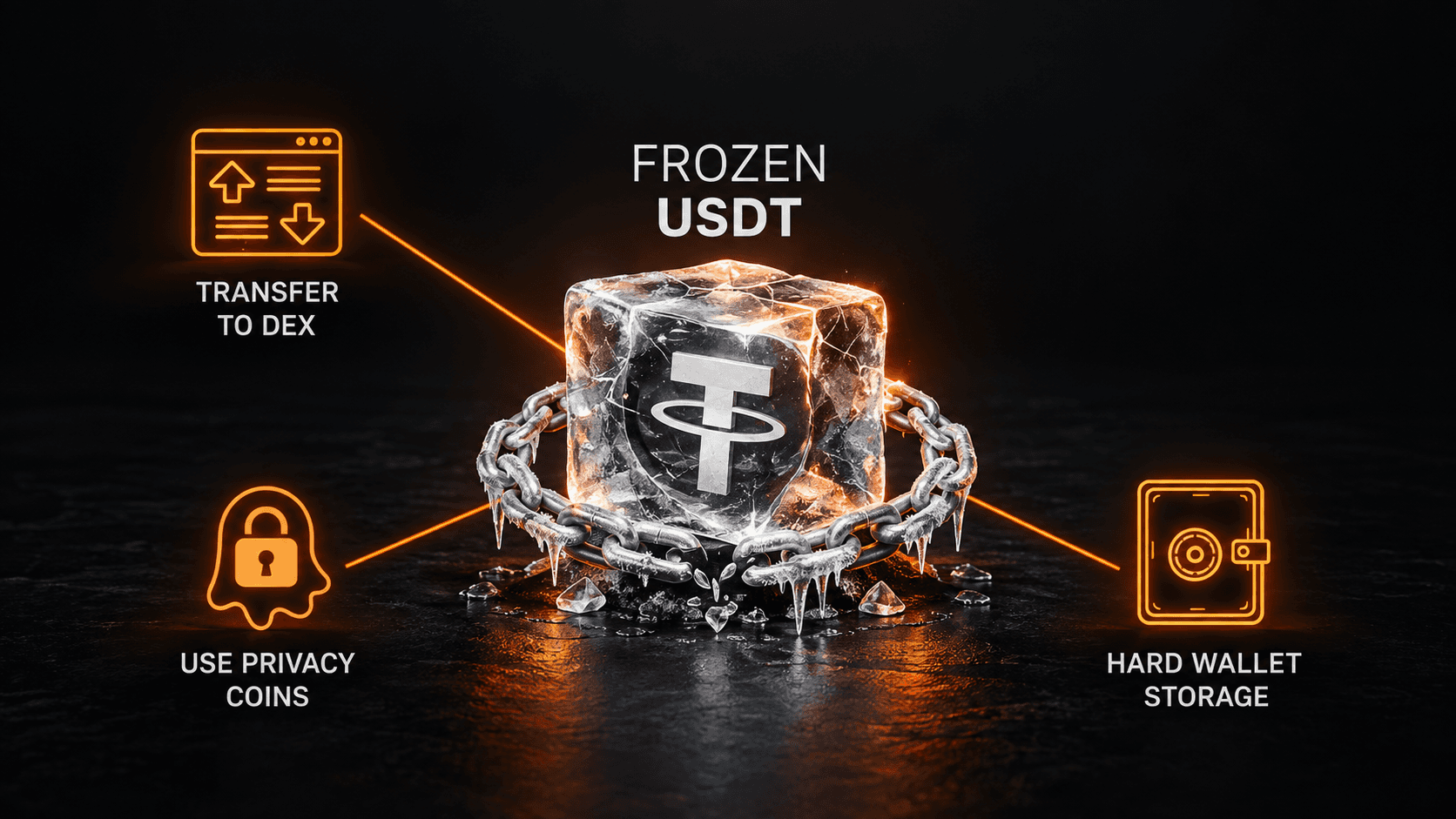
Your goal is to show the funds are legitimate. Act quickly, stay factual, and document where the money came from and how it moved. Avoid rushing other assets out of the wallet, as that can look like evasion.
Collect evidence & prove source of funds
Tether only reviews cases backed by verifiable data. Prepare:
transaction hashes for the deposits and transfers that led to the frozen balance;
invoices, contracts, or trade confirmations explaining each payment;
a simple diagram showing how the funds reached your wallet;
details of counterparties, such as exchange accounts or verified wallet owners.
Contact Tether with a complete KYC package
Contact Tether through the support channels on its official website and state that your address was blacklisted. Include identity documents (a passport, or company registration), a timeline of related transactions, why you hold USDT on TRON, and the evidence above in one file. Keep copies of all correspondence.
If U.S. enforcement is involved
If OFAC or a U.S. law-enforcement case is behind the freeze, hire a U.S. lawyer experienced in sanctions or crypto. Only counsel can file motions on seized assets, and Tether may pause direct appeals until the authorities finish. Follow the case on PACER, CourtListener, or in Treasury press releases.
Can a freeze be lifted on USDT TRON: realistic outcomes

A freeze can be reversed when Tether is satisfied the funds are legitimate and no authority objects. With sanctions or an open investigation, the answer may be no.
Unfreeze scenarios & timelines
Release is realistic with complete KYC and transaction evidence, no active law-enforcement hold, and a confirmed legal source of funds. A well-documented case can take a few weeks; with authorities involved, months. Sanctions-based freezes usually last as long as the designation.
Burn-and-reissue / forfeiture paths
When frozen USDT is linked to proven crime or sanctions, Tether can call destroyBlackFunds and remove the tokens permanently. An equivalent amount may later be reissued to victims or to a government account after a court order; under U.S. seizures the tokens are recorded as forfeited. The May 2026 lawsuit is an attempt to use exactly this path for the $344 million.
Five steps to protect your USDT on TRON from freezes
No setup makes a wallet immune, but clean, traceable activity makes a freeze less likely and easier to resolve.
Check counterparties before large transfers by looking up their address history on Tronscan.
Work with exchanges and partners that carry out KYC and provide receipts.
Keep separate wallets for trading, savings, and payments, so one bad transfer cannot affect everything.
Use secure devices and verify addresses carefully, because phishing and malware can redirect funds to tainted wallets.
Store transaction hashes, invoices, and correspondence for every significant payment.
For merchants and payment teams
For a business, one tainted customer payment can freeze working capital and stop payouts. The defence is structure: take payments on dedicated deposit addresses, ideally one per invoice, move cleared funds to a treasury wallet that never touches outside parties, pay out from a separate wallet holding only the day’s needs, and keep TRX and Energy for fees in its own wallet.
Log the invoice ID, customer ID, transaction hash, and source and destination addresses for every payment, so a flagged address can be isolated quickly. More wallets also means more addresses needing resources; many teams automate delegation through the TRON Energy API instead of topping up each one by hand.
FAQ about USDT freezes on TRON
Short answers to the questions people ask most often about frozen USDT on TRON.
Can Tether freeze non-custodial TRON wallets?
Yes. A freeze targets the address, not the wallet type, so a blacklisted address cannot send USDT whoever holds the keys.
Can a frozen address still receive USDT?
Usually yes, since the contract checks the sender. But anything that arrives is locked too.
Does a USDT freeze affect TRX and other tokens?
No. TRX, other TRC-20 tokens, staking, and Energy on the address keep working.
Do TRON Energy or fee credits help avoid freezes?
No. Energy and Bandwidth only pay for processing and have no effect on Tether’s compliance decisions.
How long do reviews and decisions take?
From a few weeks to several months, depending on your documents and whether authorities are involved.
How long do reviews and decisions take?
No. A freeze affects single addresses; a pause would stop every USDT transfer and is not used for individual cases.
Should merchants stop accepting USDT TRC-20?
No. Freezes target specific addresses tied to sanctions or crime. Separate wallets, screen incoming funds, and keep records instead.
Will moving funds before a freeze protect you?
No. Compliance systems track related wallets, and rushing funds out is treated as evasion.
Latest Release